

Wheels Beneath the March of War
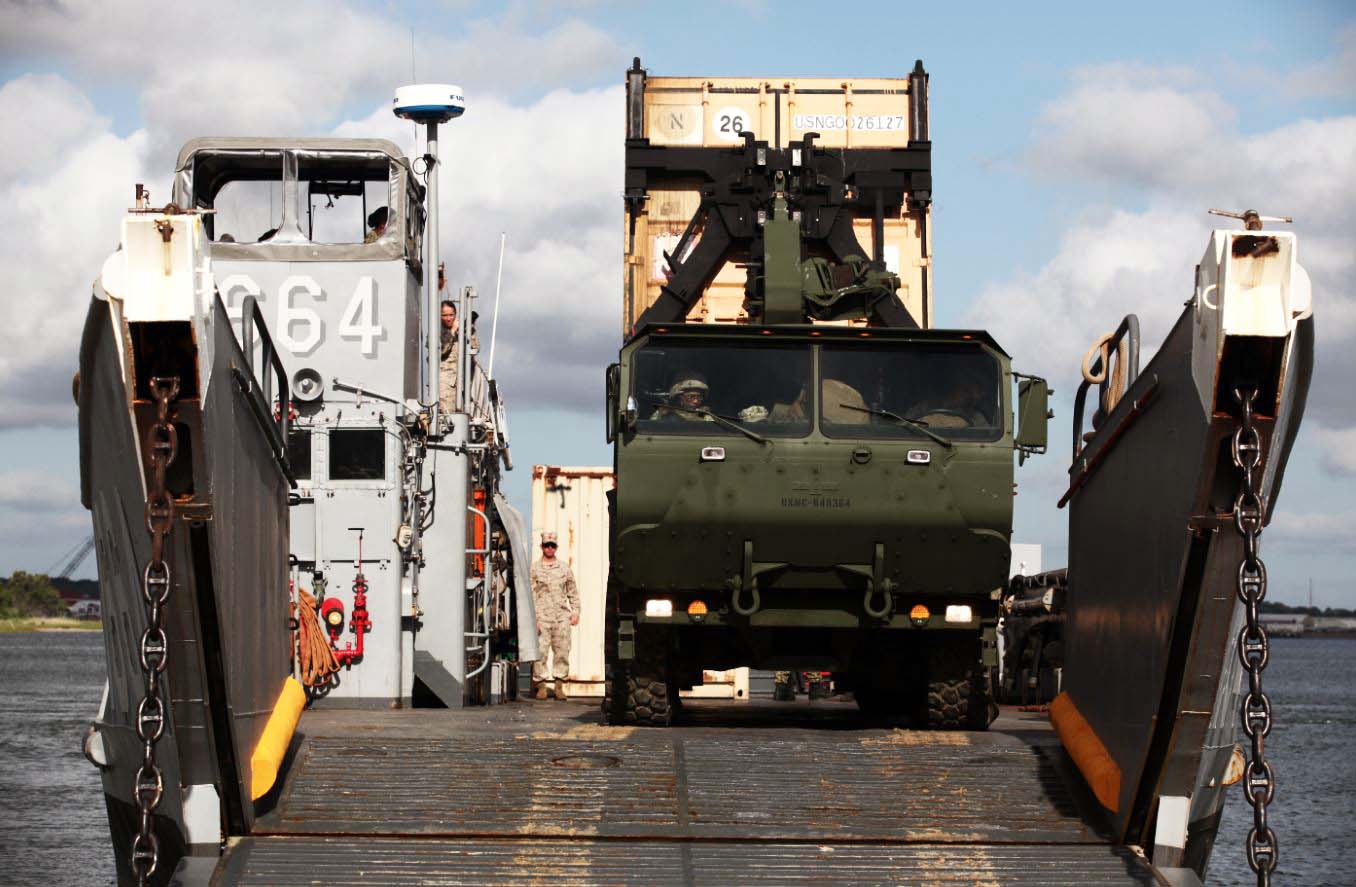
Unraveling how the unseen machinery of logistics has sustained wars and shaped victories across history
The Hidden Artery of Warfare
Every grand offensive, every sweeping maneuver, and every decisive victory throughout history has rested upon an invisible foundation. Logistics, often overshadowed by battlefield heroics, serves as the lifeblood of armies. It is the art of moving men, munitions, and sustenance across the relentless expanse of war. Without it, even the most powerful forces crumble under their own weight. From the Roman legions marching with organized supply caravans to the modern convoys that cross continents, the principle remains unchanged: an army’s strength is measured not only in weapons but in its ability to endure. The hidden artery of warfare connects distant depots to the front lines, transforming chaos into coordination. When it falters, hunger replaces morale, and victory turns to retreat. Napoleon himself confessed that an army marches on its stomach, acknowledging that strategy without sustenance is folly. Behind every famous general, there exists a legion of quartermasters, drivers, and engineers whose precision determines the fate of nations.
Ancient Roads and the Birth of Supply
In the ancient world, the logistics of war demanded as much ingenuity as courage. The Persians, Greeks, and Romans mastered the science of sustaining campaigns across vast territories. The Roman Empire, in particular, stands as a testament to logistical brilliance. Its legions could traverse continents because of an intricate network of roads, waystations, and supply depots that predated modern infrastructure by centuries. Each legion carried not only weapons but engineers and laborers who could construct bridges and fortifications at will. Grain shipments followed in carefully planned intervals, ensuring that soldiers remained fed even deep in foreign lands. The Romans understood that hunger could defeat them faster than any enemy spear. Similarly, Alexander the Great’s conquests depended on his mastery of movement. His forces were supplied through pre-arranged depots and swift foraging operations. Ancient logistics required foresight, and those who lacked it found themselves devoured by their ambitions. Hannibal’s crossing of the Alps remains legendary, but it was also a lesson in the cost of overreach. The freezing losses suffered by his army underscored a truth as old as war itself: strategy without supply is suicide.
Industrialization and the Expansion of Supply Networks
The Industrial Revolution transformed warfare from a contest of men into a contest of machinery. Armies swelled in size, weapons multiplied, and campaigns extended across continents. With industrial power came logistical complexity. Railroads became the arteries of empires, carrying troops and ammunition to fronts that stretched for hundreds of miles. During the American Civil War, both Union and Confederate armies learned that control of rail lines was as vital as victory in battle. The Union’s superior infrastructure allowed it to outlast the South, proving that industrial logistics could determine destiny. By World War I, this principle reached a grim zenith. Trenches locked armies in stalemates that devoured supplies at an unprecedented rate. Millions of tons of shells, rations, and uniforms had to be produced, shipped, and distributed with mathematical precision. The logistics of attrition replaced the tactics of maneuver. Behind every barrage lay an army of laborers, dockworkers, and factory hands who fed the war machine. It was during this period that logistics evolved from necessity into science, marking the dawn of the modern supply chain.
The Global Machine of World War II
World War II redefined logistics on a planetary scale. Never before had so many men and materials moved across so many theaters simultaneously. The success of the Allied forces was not due solely to courage or superior firepower but to the orchestration of global supply. The United States became an industrial colossus, producing tanks, aircraft, and food in quantities that dwarfed anything seen before. Convoys crossed oceans under constant threat from submarines, each ship a floating artery sustaining distant fronts. In Europe, the Red Ball Express supplied Allied armies as they advanced from the beaches of Normandy to the heart of Germany. Thousands of trucks, manned largely by African American drivers, kept the offensive alive by delivering fuel and ammunition day and night. On the Eastern Front, the Soviet Union’s relocation of entire industries beyond the Urals demonstrated logistical genius. Trains carried factories, workers, and resources across thousands of miles, ensuring that production never ceased. The war was as much a triumph of logistics as it was of arms, and its outcome proved that wars are won not only by those who fight, but by those who keep the fighters fed, armed, and moving.
The Cold War and the Era of Prepared Supply
In the shadow of nuclear rivalry, logistics took on new dimensions. The Cold War was not fought through open battle but through readiness and deterrence, both of which demanded vast logistical networks. The United States and the Soviet Union maintained stockpiles of weapons and fuel across the globe, prepared for a war that never fully materialized. The logistical systems developed during this period emphasized mobility and endurance. The North Atlantic Treaty Organization designed intricate resupply corridors across Europe, ensuring that reinforcements could flow west or east at a moment’s notice. Airlift operations became the new face of rapid response, epitomized by the Berlin Airlift, where Allied planes supplied a city besieged without firing a shot. The lesson of that crisis was profound: logistics could serve as both a weapon and a humanitarian tool. The Cold War also saw the birth of computerized logistics, as data and communication became as vital as trucks and trains. Supply chains evolved into digital networks, capable of predicting shortages and adjusting in real time, setting the stage for the modern era of precision warfare.
Fuel, Food, and the Fragility of Modern Armies
Modern armies are more dependent on supply chains than any of their predecessors. Every tank, aircraft, and soldier requires a constant flow of energy, maintenance, and provisions. Fuel has replaced grain as the critical commodity of warfare. The Gulf War illustrated this dependency vividly, as coalition forces relied on an immense logistical apparatus to sustain their high-tech arsenal in the desert. For every combat soldier, dozens of support personnel worked behind the scenes to ensure that vehicles ran, weapons functioned, and communication lines remained open. The complexity of this system also exposes its vulnerability. Disruption to supply lines, whether through cyberattacks, sabotage, or natural disaster, can cripple operations within hours. In asymmetric conflicts, insurgents often target logistics precisely because they understand its importance. The modern battlefield may appear dominated by drones and satellites, yet its foundation remains trucks, ships, and pipelines. Warfare has evolved, but hunger, fatigue, and fuel shortages remain its timeless adversaries. The fragility of logistics reveals that even the most advanced armies are never far from collapse if the flow of supply is broken.
The Rise of Automation and Data in Military Logistics
Technology continues to transform how armies sustain themselves. Automation and artificial intelligence now play pivotal roles in managing supplies. Unmanned vehicles deliver cargo across dangerous routes, reducing the risk to human drivers. Predictive algorithms monitor consumption rates and forecast future needs, allowing commanders to make informed decisions before shortages occur. In modern conflicts, logistics is no longer reactive but anticipatory. The integration of data across global networks allows real-time tracking of every crate, container, and bullet. Yet this digital sophistication introduces new dangers. Cyberwarfare threatens not only communications but the supply chains themselves. A single disruption in data flow can paralyze operations more effectively than a physical blockade. The challenge of the future lies in maintaining flexibility amidst automation, ensuring that human oversight remains central to decision-making. Technology may increase efficiency, but without ethical and strategic restraint, it risks turning logistics into a mechanical process devoid of adaptability. The soldier of tomorrow will not only carry a rifle but also rely on systems of information that stretch across continents, linking every front line to every factory.
The Unsung Architects of Victory
Throughout history, logisticians have stood in the shadows of generals. Their names rarely appear in history books, yet their work has decided the fate of empires. The planning required to move an army is a feat of imagination and endurance that rivals any tactical maneuver. It demands the ability to foresee needs before they arise, to calculate distances, and to balance efficiency with resilience. In every campaign, these unseen architects form the backbone of strategy. During the Second World War, General George C. Marshall described logistics as the lifeblood of military success, emphasizing that even the boldest plans were useless without the means to sustain them. Similarly, the Soviet triumph at Stalingrad owed much to the logistical mastery that outlasted the German supply collapse. The art of logistics requires patience, adaptability, and an understanding of human limits. It is not glorified, yet it is indispensable. The soldiers who repair bridges, drive convoys, and manage depots carry the weight of history as surely as those who charge into battle. Their contribution is quiet, but their legacy is eternal.
The Perpetual Flow of War
In every era, from the chariots of ancient Mesopotamia to the satellites of the modern age, the essence of war has remained the same: movement sustained by supply. Logistics is the thread that binds strategy to survival, turning intent into action and endurance into victory. Its story is not written in the clash of swords or the thunder of artillery but in the hum of engines, the creak of wagons, and the rhythm of boots marching toward an unseen depot. The future of warfare will continue to depend upon this silent machinery, adapting to new technologies and new terrains, but never losing its fundamental purpose. Empires will rise and fall, commanders will gain glory and fade, yet the logistics that sustain them will persist, as vital and invisible as the pulse beneath the armor. War may change its face, but the flow of supply remains eternal, the unbroken current beneath the tide of battle.