

Beneath the Veil of Understanding
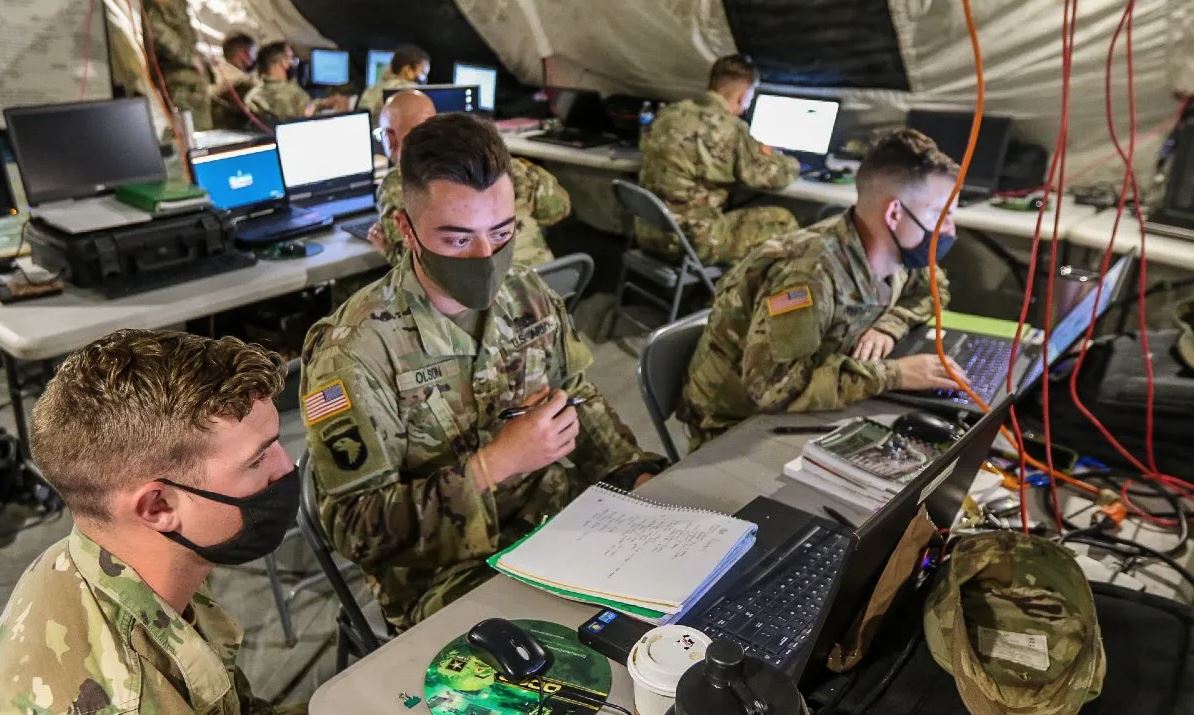
The unseen craft of decoding war, perception, and power through the discipline of intelligence analysis
The Birth of the Analytical Mind
Military intelligence analysis began not with machines or satellites but with observation, inference, and patience. Long before the term existed, scouts, spies, and code keepers studied the enemy’s movements, seeking patterns hidden within the ordinary. Ancient civilizations like Egypt and China developed early forms of intelligence gathering, recording the habits of rivals and measuring intentions by subtle clues. The power of knowledge over numbers became clear to rulers who realized that wars could be won before the first clash if the mind was sharper than the sword. From battlefield messengers to deciphered correspondence, each fragment of information became a piece of a greater puzzle. Over time, this process evolved from instinct to method, giving rise to the analytical mind, a soldier of thought who fought not with weapons but with understanding. The art of intelligence required one paradoxical skill above all others: the ability to trust evidence while questioning every truth it suggested.
Observation and the Discipline of Perception
In the world of intelligence, seeing is never simple. Observation demands detachment, precision, and humility. The analyst must look beyond what appears obvious and uncover meaning in what is absent. Military observers during the Napoleonic wars learned this when they tracked troop movements not by sight alone but by indirect signs, smoke from campfires, disrupted terrain, or intercepted supply reports. They developed an intuition that transformed the mundane into signals of strategy. Observation became an intellectual battlefield where clarity competed with deception. The human mind, prone to assumption, became both weapon and weakness. True perception required restraint, the ability to withhold judgment until patterns formed organically. Intelligence schools across the twentieth century refined this approach, teaching recruits that data without context is noise, and that every conclusion must survive the test of contradiction. Observation, at its purest, was never about seeing more but about seeing truth where others saw only motion.
The Cryptic War of Words and Numbers
As wars grew larger and borders more complex, so too did the volume of information that needed interpretation. The twentieth century transformed intelligence into a war of encryption and decryption. The cryptanalysts of World War II embodied this transformation. They lived in a world where words became weapons and silence held secrets. In Bletchley Park, British mathematicians and linguists broke codes that shifted the balance of global conflict. Every intercepted message represented the mind of an enemy exposed through logic and perseverance. Similarly, the American success in deciphering Japanese naval codes before the Battle of Midway demonstrated the strategic power of analysis. Behind these victories lay not magic but discipline. Codebreakers worked through endless repetition, charting probability and pattern until randomness revealed design. They proved that war could be fought with equations as effectively as with artillery. Yet their greatest lesson endured beyond numbers: intelligence is not the discovery of truth, but the reduction of uncertainty until decision becomes possible.
The Human Factor in the Web of Information
Technology may extend the reach of intelligence, but human judgment remains its foundation. Analysts interpret more than data; they read behavior, culture, and emotion. The Cold War made this painfully clear as both sides raced to interpret one another’s every move. A photograph of a missile silo or a diplomat’s phrase could ignite or prevent catastrophe. Psychological profiling became as crucial as satellite imagery. Intelligence officers studied adversaries’ habits, speech patterns, and even preferred cigars, seeking windows into decision-making processes. The process was as much art as science. Bias, fear, and ambition infiltrated even the most rigorous assessments. Analysts learned that the mind could distort information as easily as the enemy could conceal it. To counter this, modern intelligence institutions developed structured analytic techniques designed to challenge assumptions, forcing teams to argue against their own conclusions. It was a safeguard against the oldest deception of all, the one the mind plays upon itself.
The Era of Signals and the Birth of the Invisible War
The mid-twentieth century marked the dawn of a new dimension in intelligence: the domain of signals. As communication networks spanned oceans, warfare moved into the ether. Signals intelligence, or SIGINT, turned invisible transmissions into tangible insight. Every intercepted radio call, radar pulse, or digital footprint became a potential weapon. Agencies built vast listening stations to capture whispers traveling through the atmosphere, feeding them into machines that could interpret frequencies faster than any human could think. Yet amidst this technological revolution, the principle of interpretation remained unchanged. Analysts sifted through oceans of data searching for anomalies, the subtle deviations that betrayed intent. The invisible war demanded a new kind of soldier, one fluent in both mathematics and psychology, capable of hearing strategy within static. In this theater, silence could be louder than speech, and a missing transmission could reveal more than a thousand intercepted words. The world learned that to control communication was to control perception, and to interpret it was to control the outcome.
Failures, Oversight, and the Weight of Misjudgment
Intelligence is not immune to error. History bears the scars of miscalculation, when interpretation faltered under pressure or politics clouded analysis. The attack on Pearl Harbor in 1941 exposed the devastating cost of disregarding signals that did not fit expectation. Analysts had pieces of the truth but failed to assemble them in time. Similar lapses occurred during the Yom Kippur War of 1973, when overconfidence led to surprise. These failures remind the world that intelligence is a discipline of humility. Certainty is a luxury analysts cannot afford. Every piece of information must be viewed through multiple lenses, weighed against both possibility and probability. When analysis becomes echo chamber, it loses its soul. Modern reforms in intelligence agencies arose from this awareness, emphasizing collaboration across branches and transparency in reasoning. Failure, though painful, became teacher. It proved that intelligence must always evolve, for the moment it assumes mastery is the moment it falls blind.
The Digital Age and the Expansion of the Analytical Horizon
Today, the scale of military intelligence has grown beyond comprehension. Satellites orbiting the earth provide real-time imagery of conflict zones. Algorithms process billions of communications in seconds, tracing patterns no human could recognize alone. Artificial intelligence has become both tool and partner, filtering noise from meaning with unmatched precision. Yet technology introduces a paradox. The more data that exists, the harder it becomes to discern what matters. Analysts now swim in information so vast that the danger lies not in scarcity but in abundance. The art of intelligence has shifted from collection to curation. Human analysts, guided by ethics and context, must decide which truths deserve attention and which are mere distraction. The challenge is philosophical as much as technical: in a world of infinite signals, meaning itself must be engineered. The digital era has not diminished the analyst’s role; it has made their insight indispensable. Machines can process, but only minds can interpret.
The Moral Landscape of Modern Intelligence
With great knowledge comes great temptation. Intelligence analysis operates in the shadows, where moral lines blur easily. Every decision involves the balance between secrecy and accountability, protection and intrusion. Surveillance that defends one nation may violate the freedom of another. Analysts must navigate this ethical battlefield with discipline and empathy, remembering that their power rests upon unseen lives. The post-9/11 era intensified this dilemma, as the pursuit of security expanded into the realms of privacy and civil liberty. The debate continues: how much transparency can intelligence afford without compromising safety? History shows that unchecked secrecy breeds corruption, yet excessive openness breeds vulnerability. The analyst walks between these extremes, burdened with responsibility that few will ever see. In the end, the true measure of intelligence lies not only in its accuracy but in its conscience. To know everything is meaningless if one forgets why knowing matters.
The Eternal Pursuit of Understanding
Intelligence analysis is not a science of certainty but of pursuit. It is a discipline that thrives in ambiguity, forever chasing understanding through fragments of truth. From the scouts of ancient armies to the analysts of modern command centers, its essence remains unchanged: to reduce uncertainty in a world built upon chaos. The future of military intelligence will likely merge human intuition with artificial precision, creating systems that think, predict, and adapt faster than any single mind. Yet even as technology advances, the human element will remain the heart of the craft. The analyst’s intuition, doubt, and ethical compass cannot be replicated by code. As wars evolve and realities blur, intelligence will continue to stand as both mirror and shield, a reflection of humanity’s endless search for clarity amid confusion. The silent network will expand, but its echoes will always speak of the same truth: that knowledge, when tempered by wisdom, is the strongest defense any civilization can hold.