

Ashes Beneath the Frozen Balance
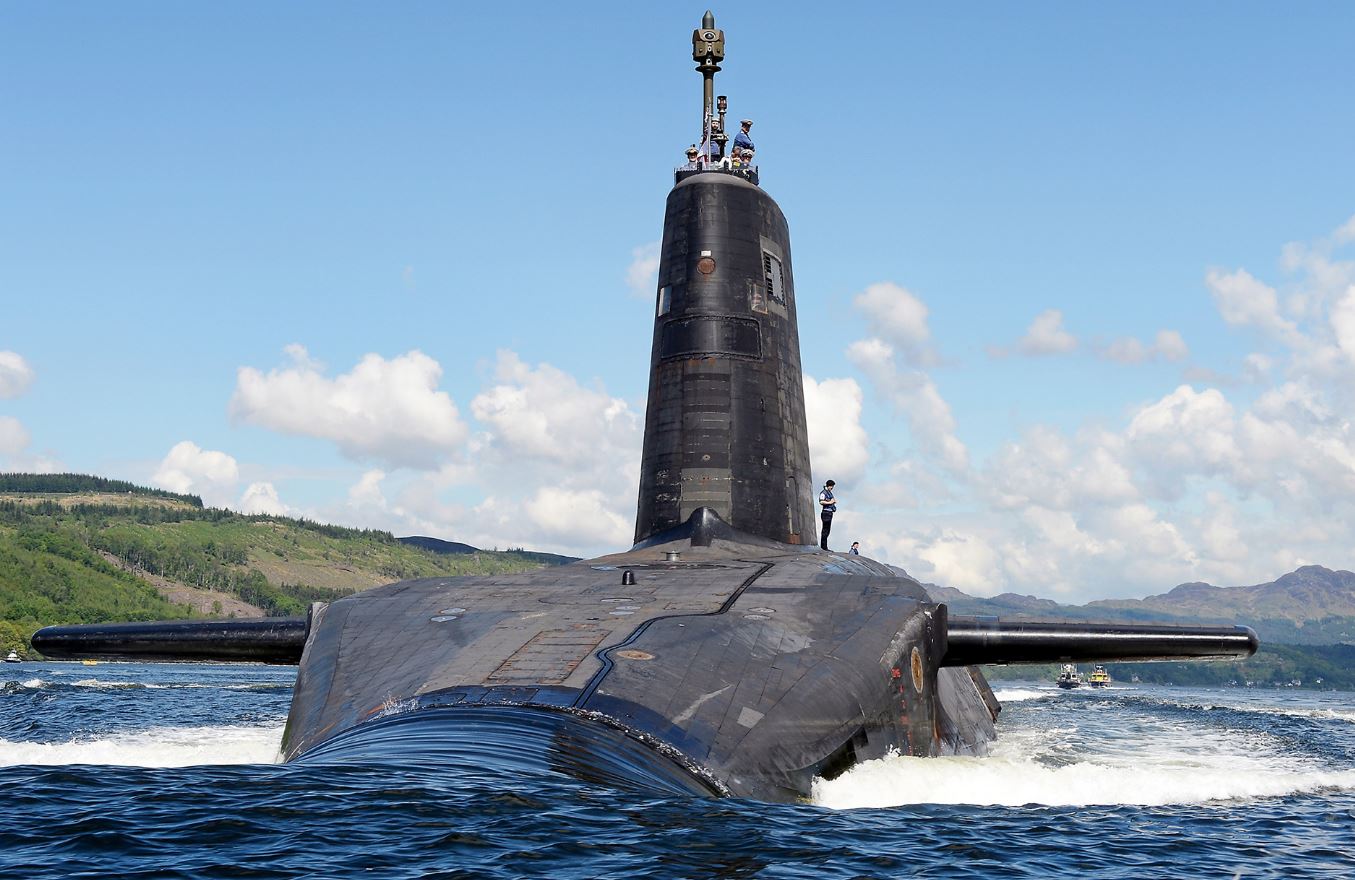
The delicate balance of fear, logic, and survival that reshaped global warfare
The Dawn of the Atomic Age
When the first atomic fire rose above the desert of New Mexico in 1945, humanity entered an age where power could no longer be measured by armies alone. The weapon that ended the Second World War also began an unending psychological siege. The atomic bomb was not simply a tool of destruction, it was an idea that transformed the logic of war itself. In Hiroshima and Nagasaki, the world witnessed devastation so absolute that victory lost its meaning. From that moment onward, military strategy was no longer about defeating the enemy, but preventing catastrophe. The atomic age demanded a new kind of calculation, one that placed survival above conquest. States realized that possession of nuclear weapons offered paradoxical strength, as the ability to destroy everything became the very thing that preserved peace. It was the birth of deterrence, a fragile equilibrium where the prospect of annihilation became the ultimate restraint. What began as a scientific triumph soon became a moral riddle, forcing civilization to coexist with its own extinction.
The Logic of Fear and the Birth of Deterrence
In the early years of the Cold War, nuclear strategy was forged not in battlefields but in minds. Theorists, mathematicians, and military planners worked to define how two superpowers could live under the shadow of mutual destruction. Out of this tension arose the concept of deterrence, the belief that the threat of retaliation could prevent aggression. It was an idea as brutal as it was brilliant. Fear itself became a weapon, carefully managed through signals, posture, and rhetoric. The policy of Mutual Assured Destruction, known as MAD, captured the essence of this logic. It held that neither side would launch a first strike, knowing that doing so would guarantee its own annihilation. Deterrence thus became a psychological battlefield where credibility and perception mattered more than force. Each missile test, each statement of readiness, became a move in a deadly game of chess played with human existence as the stake. The age of nuclear deterrence was less about war and more about the art of not fighting it.
The Architects of the Nuclear Balance
Behind the rhetoric of politicians and the silence of missile silos stood the architects who shaped the nuclear order. Strategists like Bernard Brodie, Herman Kahn, and Thomas Schelling crafted theories that defined how nations could live with the unthinkable. Brodie famously declared that the chief purpose of military power had changed from winning wars to averting them. Kahn, with his controversial thought experiments, explored the unspoken question of what would happen after a nuclear exchange, forcing planners to confront moral and practical implications they wished to ignore. Schelling viewed deterrence as communication, an interaction of threats where credibility became as vital as capability. These thinkers transformed nuclear weapons into instruments of policy rather than pure destruction. Their work built a framework of restraint, balancing terror with reason. Yet the paradox endured: stability was built upon the constant readiness to destroy. The brilliance of deterrence lay in its fragility, and its success depended on humanity’s ability to think rationally while surrounded by weapons of absolute power.
The Cold War and the Dance of the Superpowers
From the late 1940s to the collapse of the Soviet Union, the United States and the USSR lived in a state of continuous strategic tension. Each sought security through dominance, yet every advancement by one side was mirrored by the other. The arms race was not just a contest of numbers but of symbolism. Missiles in silos, submarines under oceans, and bombers in perpetual flight became instruments of political theater. Treaties such as SALT, START, and the Non-Proliferation Treaty emerged to contain the madness, yet each agreement carried its own contradictions. Neither superpower trusted the other, but both understood that open conflict would end civilization. Crises such as the Cuban Missile standoff in 1962 revealed how close humanity could come to disaster through miscalculation. The confrontation over Cuba became the turning point, where restraint triumphed over fear. It showed that even in the face of annihilation, diplomacy could prevail. The Cold War’s long shadow proved that deterrence worked not because of technology, but because of human hesitation in the face of finality.
The Moral and Psychological Toll
Living under nuclear deterrence reshaped not only policy but consciousness. Entire generations grew up beneath the silent terror of the mushroom cloud. Literature, film, and art reflected a world haunted by the possibility of sudden extinction. Governments constructed civil defense plans that no one truly believed in, while citizens practiced drills that offered the illusion of safety. Psychologically, deterrence created a constant tension between denial and awareness. The fear of destruction became normalized, woven into the background of daily life. Scientists and soldiers carried the burden of maintaining the unthinkable, knowing that a single error or misunderstanding could trigger irreversible consequence. The moral dimension of deterrence became a subject of global debate. Could peace built on terror be called peace at all? Was survival justified if it required permanent readiness for annihilation? In this silent moral battlefield, humanity confronted its own reflection, realizing that power without empathy was a form of madness disguised as stability.
The Spread of the Nuclear Shadow
While deterrence stabilized relations between the great powers, it also unleashed new anxieties. As technology spread, the number of nuclear states grew. Britain, France, China, India, Pakistan, and later others joined the atomic circle, each motivated by security and prestige. The proliferation of weapons increased the complexity of deterrence, introducing regional rivalries and unpredictable actors. During the Cold War, deterrence had been a bipolar system managed through communication and control. The modern age, however, introduced ambiguity. Smaller nations could use nuclear capabilities as leverage, while the risk of non-state actors acquiring fissile material added an entirely new dimension of fear. The doctrine of deterrence depended on rationality, yet rationality itself could not always be guaranteed. This expansion of nuclear capability diluted the delicate equilibrium that had preserved global order for decades. The question shifted from how to prevent nuclear war to how to prevent nuclear access. The balance of terror became decentralized, and with it, the world entered a new era of uncertainty.
Technology and the New Face of Deterrence
Modern deterrence extends far beyond missiles and warheads. Cyber warfare, artificial intelligence, and precision-guided systems have redefined strategic calculation. Nations now possess the ability to disable command networks or manipulate information without firing a single shot. Deterrence in the twenty-first century relies as much on credibility in cyberspace as on nuclear arsenals. The concept of second-strike capability, once guaranteed by submarines hidden beneath the seas, now depends on digital resilience. Advanced detection systems and satellite surveillance provide transparency but also increase vulnerability to deception. The introduction of hypersonic missiles, capable of evading traditional defenses, has reignited fears of instability. The line between conventional and nuclear deterrence grows increasingly blurred. Strategic ambiguity, once a deterrent, now risks confusion. In an interconnected world, deterrence has become a system of perpetual adaptation, where each new technology redefines what it means to maintain peace. The challenge lies not in building weapons, but in sustaining the trust that keeps them unused.
The Future of Deterrence and Human Paradox
As global politics shift and technology accelerates, the philosophy of deterrence stands at a crossroads. Climate change, cyber conflict, and rising nationalism all compete for attention, yet the nuclear question persists, unresolved and eternal. The old frameworks of deterrence were built on predictability, but the modern world thrives on unpredictability. As new powers emerge and alliances fracture, the logic of mutual fear must adapt or fail. Efforts toward disarmament face political resistance, and public awareness of the nuclear threat has faded into complacency. Yet the danger remains as present as ever. The deterrence system that once prevented world war may one day collapse under misunderstanding or hubris. The survival of civilization depends on the same fragile principle that defined the last century: restraint. Deterrence is not a machine, but a mirror reflecting human judgment. The question is no longer whether the weapons will be used, but whether humanity can remain worthy of the power it has created. The answer lies not in technology, but in wisdom.
The Silent Covenant of Survival
In the quiet chambers of command centers and the vast emptiness of missile silos, the logic of deterrence continues its vigil. It is a strange covenant between fear and reason, where the preservation of life depends on the readiness to destroy it. Each generation inherits this burden, often without realizing it. The nuclear age has lasted longer than any expected, sustained not by progress but by caution. Yet beneath that caution lies a deeper truth: deterrence endures because humanity, despite its flaws, continues to choose survival. It is not courage that has kept the missiles silent, but the awareness of consequence. The lesson of deterrence is that strength without restraint is meaningless, and that peace, however uneasy, is worth the weight of vigilance. As nations drift through uncertainty, the shadow of the arsenal remains both warning and reminder. In the end, the strategy of deterrence is not about weapons at all, it is about the fragile wisdom of a species that has learned, at least for now, to live with its own power.