
Engines of Strategy Beneath the Shifting Front
The evolution of tactical genius and the restless pursuit of mastery in the art of war
The Origins of Tactical Thinking
Long before technology and doctrine defined warfare, tactics were born from necessity. Primitive hunters who learned to corner their prey unknowingly created the first principles of maneuver and deception. As tribes became armies, strategy evolved into survival itself. Early commanders discovered that success depended not on numbers alone but on coordination, timing, and adaptation. From the phalanx formations of ancient Greece to the charioteers of Egypt, the earliest innovations were driven by imagination. Leaders such as Sun Tzu turned battle into philosophy, teaching that victory begins in the mind long before the field is chosen. To outthink an opponent became the truest form of power. The ancients taught that adaptability was the soul of survival, and that insight, not aggression, decided destiny. Those ideas, whispered through generations, became the foundation of every tactical revolution that followed. Each innovation carried within it a fragment of that first realization: that intelligence, when applied to conflict, can be as deadly as any weapon.
The Shifting Formations of Antiquity
In the ancient world, armies were living organisms, their formations the veins through which power flowed. The Greek hoplites perfected the phalanx, an impenetrable wall of shields and spears that turned unity into dominance. Yet what seemed invincible soon revealed its limits. The Macedonians, under Philip II and his son Alexander, extended the reach of the phalanx, pairing it with mobile cavalry to create fluidity where rigidity once ruled. The Persians, accustomed to sprawling forces and archers, fell before this coordination of speed and strength. Tactical innovation thrived wherever commanders questioned tradition. Hannibal at Cannae, centuries later, used double envelopment to crush the mighty Romans, proving that even disciplined might can collapse under clever geometry. Every battlefield of antiquity was a laboratory where courage met intellect. In the constant interplay of strength and strategy, the seeds of modern tactics were sown, demonstrating that movement, deception, and cohesion mattered as much as weaponry itself.
Medieval Shifts and the Birth of Asymmetry
As empires fell and feudal kingdoms rose, the rhythm of warfare changed. Castles replaced open fields as centers of power, and with them came new forms of siege and defense. Cavalry dominated Europe’s battlefields, transforming speed into status. Yet even in this age of armored nobility, innovation continued to bloom from unlikely places. The English longbow, wielded by commoners, shattered the dominance of knights at Crécy and Agincourt, marking the dawn of ranged supremacy. Elsewhere, the Mongol armies under Genghis Khan redefined mobility, using horse archers and coordinated feints to overwhelm static foes. Their tactics transcended borders, spreading east and west like wildfire. The idea of striking swiftly and unpredictably became universal. The medieval age taught that adaptability favored those who broke the pattern, and that victory often belonged not to the most powerful, but to the most perceptive. It was an era where ingenuity could topple tradition, and where the art of war became a study of unpredictability.
The Renaissance of Discipline and Fire
With the advent of gunpowder, warfare entered a new age of sound and smoke. The sword gave way to the musket, and the castle walls that once symbolized safety became tombs of stone. The sixteenth and seventeenth centuries demanded new thinking, as commanders sought ways to integrate firearms into old structures of power. The Spanish tercios combined pikes and muskets into organized squares, balancing offense and defense with mechanical precision. Drill and formation replaced individual valor, transforming soldiers into synchronized instruments of statecraft. Artillery reshaped geography itself, erasing the boundaries between city and battlefield. The rise of discipline as a tactical necessity reflected a deeper shift: war was no longer personal, but systemic. The Renaissance produced not just artists and thinkers, but generals who treated war as architecture. The battlefield became a living canvas, where timing, angles, and proportion mattered as much as courage. Innovation no longer came only from heroes, it came from systems built to outlast them.
The Industrial Age and the Machine of Movement
The nineteenth century brought an industrial rhythm to the ancient dance of battle. Steam engines, railways, and telegraphs reshaped logistics, allowing armies to move and communicate with unprecedented speed. The Crimean War introduced coordination between nations and technologies, while the American Civil War revealed the power of rail transport and rifled artillery. It was an era of transition where tactics struggled to keep pace with invention. The mass formations of old met the mechanized precision of the new, often with catastrophic results. Commanders learned that mobility was now as vital as firepower, and that the battlefield extended far beyond the visible horizon. The Prussian military reforms under Moltke introduced decentralized command, allowing officers to make decisions based on immediate circumstances rather than distant orders. This principle, known as mission command, became the backbone of modern warfare. The industrial age demanded flexibility, and those who embraced it redefined what victory meant. For the first time, wars were no longer won solely on courage, they were won through calculation.
World War Innovation and the Death of Tradition
The First World War tore through centuries of military logic. The scale of the conflict shattered every known doctrine, forcing soldiers and scientists alike to rethink the meaning of tactics. Trenches turned the landscape into a static nightmare, yet within that stillness, innovation simmered. The use of coordinated artillery barrages, infiltration tactics, and early tanks transformed stalemate into strategy. Airplanes emerged as new instruments of observation and destruction, while code-breaking and wireless communication redefined intelligence gathering. The Second World War expanded these innovations into art forms. Blitzkrieg fused speed, surprise, and mechanization, creating a new paradigm of movement that overwhelmed traditional defenses. Amphibious assaults, paratrooper operations, and radar coordination made warfare multi-dimensional. The battlefield was no longer bound to geography, it became a living network of intelligence, logistics, and momentum. The wars of the twentieth century proved that innovation thrives under desperation, and that every great leap in tactics comes not from comfort, but from crisis.
The Cold War and the Age of Precision
In the shadow of nuclear deterrence, tactics evolved from mass confrontation to subtle control. The Cold War was not defined by the clash of armies, but by the art of maneuvering without collision. Technology became both sword and shield, as reconnaissance satellites, guided missiles, and electronic warfare systems reshaped the idea of conflict. Guerrilla warfare and insurgency tactics emerged as answers to overwhelming power, proving that even superpowers could be outmatched through adaptability. Vietnam, Afghanistan, and countless proxy wars demonstrated that small, mobile forces could challenge vast conventional armies through patience and terrain mastery. Intelligence operations replaced open battles, and deception became an instrument of survival. Tactical innovation during this period was defined by precision, the ability to strike effectively with minimal exposure. The balance between visibility and secrecy became the new front line. The Cold War may have been a war of restraint, but beneath that restraint lay the same timeless hunger to outthink the enemy.
The Digital Frontier and the New Mind of War
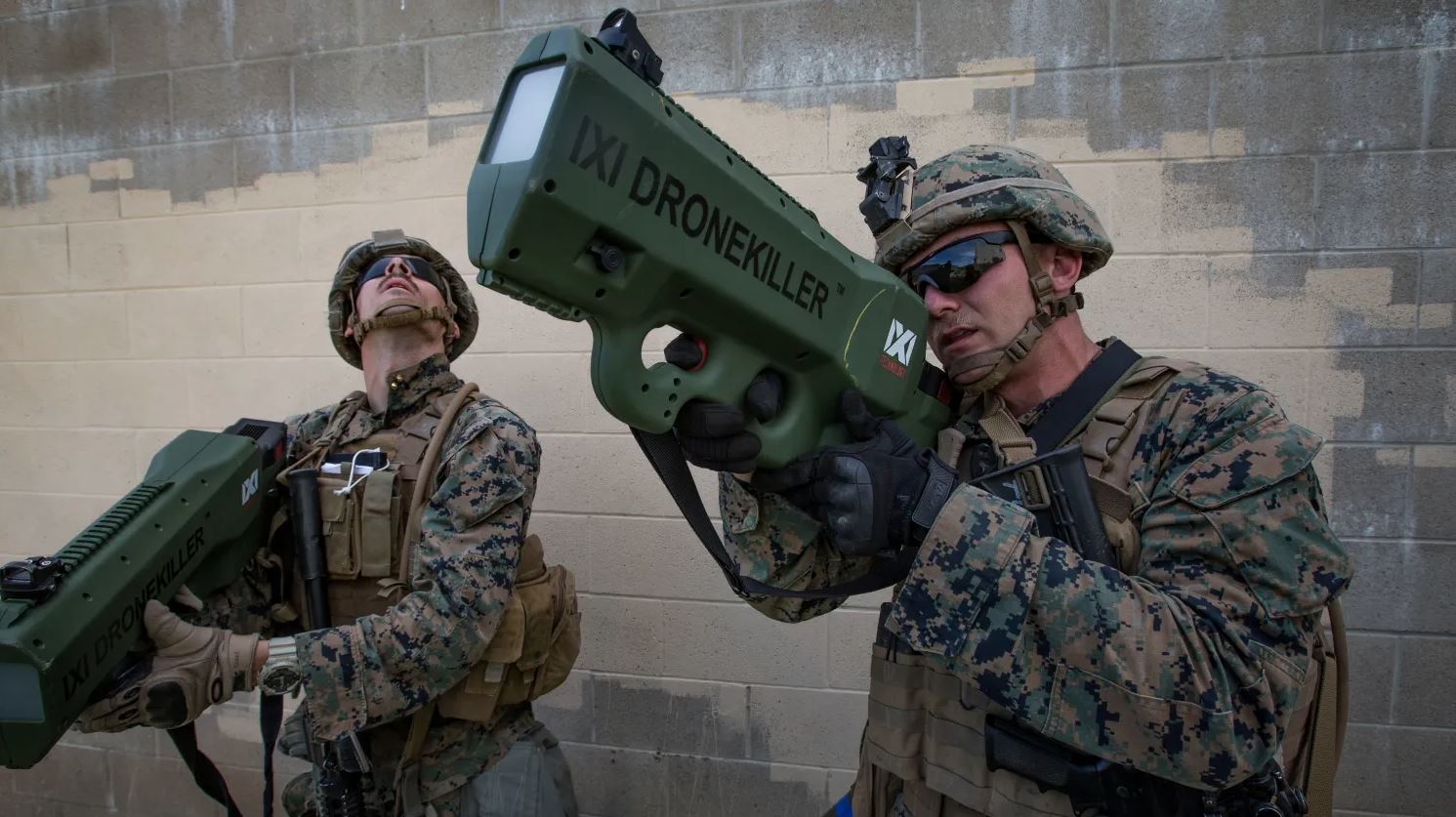
As the twenty-first century unfolded, the battlefield expanded into the invisible. Cyber warfare, autonomous drones, and artificial intelligence transformed the meaning of presence. Tactical innovation now lies in algorithms and information flow rather than movement of troops. Commanders must navigate both physical and digital terrains, where a single data breach can cripple a nation as surely as an invasion. Yet even in this world of screens and signals, the human element endures. Strategy still depends on perception, judgment, and intuition. Modern doctrines emphasize hybrid warfare, blending conventional tactics with information manipulation, cyber disruption, and psychological influence. The line between soldier and system grows thinner with each generation. Yet amid all this technology, the essence of tactics remains unchanged: adaptation, awareness, and timing. The digital frontier does not erase the past, it amplifies it. Every algorithm carries the ghost of ancient wisdom, whispering that the true battlefield is still the human mind.
The Endless Evolution of Adaptation
From spears to satellites, tactics have always been humanity’s way of imposing order on chaos. Each innovation reflects both progress and paradox: the pursuit of efficiency in an arena defined by uncertainty. The commanders of tomorrow inherit not only the weapons of their age, but the accumulated insight of every strategist before them. As technology races forward, the challenge remains the same, to think faster, act smarter, and never grow complacent. The art of tactics is not static, for war itself is a mirror of human evolution. It changes shape, yet always returns to its roots in creativity and resolve. The future will bring new forms of battle fought in domains we can scarcely imagine. But whether on the ground, in the air, or across the digital ether, one truth endures: the greatest tactical innovation is not a machine or maneuver, but the enduring ability of the human mind to adapt, improvise, and endure beyond expectation.