

Fires Beneath the Quiet Line
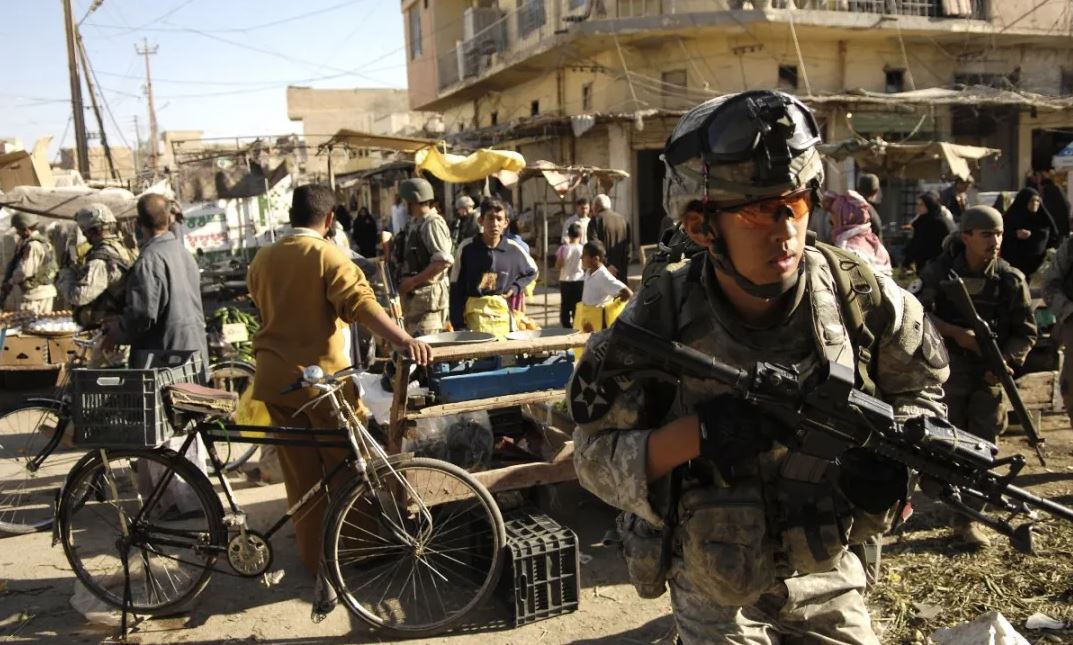
Examining the Evolution of Strategy and Ethics in Modern Counterinsurgency Warfare
The Shifting Landscape of Asymmetrical Conflict
Modern counterinsurgency began as a reaction to wars that no longer obeyed familiar maps. Conventional armies found themselves fighting invisible enemies who carried no banners and who lived among the very people soldiers were ordered to protect. The twentieth century’s decolonization struggles exposed this paradox with clarity. From Algeria to Vietnam, state forces equipped with tanks and aircraft faced insurgent networks that relied on endurance, adaptation, and narrative control. The battlefield expanded into villages, markets, and even schools, transforming every civilian interaction into a potential act of war or peace. This new form of conflict demanded more than superior firepower. It required a grasp of sociology, culture, and psychology equal to that of logistics and ballistics. Governments soon discovered that controlling territory was not enough. The real victory lay in controlling perception, loyalty, and time itself. Counterinsurgency thus evolved into a discipline where the line between soldier and diplomat blurred, and where every patrol carried both a weapon and a message.
The Roots of Insurgency in Modern States
Insurgencies thrive in the cracks of governance, where inequality, corruption, or occupation erode legitimacy. When authority loses trust, rebellion grows naturally, feeding on unmet promises and collective memories of injustice. Modern analysts describe insurgency not as chaos but as an ecosystem. Fighters, financiers, and informants coexist with civilians, creating a network that regenerates faster than it can be destroyed. The Cold War amplified these dynamics by turning local grievances into global proxy wars. Ideology provided a language for rebellion, and superpowers supplied training and arms to factions that aligned with their visions. Yet after the Cold War, the ideological clarity faded, replaced by insurgencies built around identity, survival, and control of resources. Counterinsurgency had to follow, adapting from rigid doctrines into fluid systems of engagement. The recognition that insurgents do not simply vanish when defeated militarily forced strategists to treat rebellion as a recurring symptom of societal breakdown rather than an anomaly. Thus, intelligence gathering, economic reform, and public outreach became as critical as ambushes and raids.
Hearts, Minds, and the Architecture of Persuasion
The phrase “winning hearts and minds” became the moral compass of counterinsurgency, though its meaning shifted with each generation. At its core, it acknowledged that lasting victory depends on convincing civilians that the government’s protection is safer than the insurgent’s promise. In practice, this required rebuilding trust in places where trust had long been currency. Soldiers learned to rebuild schools, repair wells, and organize local councils. Psychologists and anthropologists joined military units to interpret gestures, rituals, and grievances. Propaganda evolved into communication strategy, where posters and broadcasts competed with whispered rumors and digital messages. The heart represented emotion, the mind represented logic, and both needed equal attention. Yet the concept carried its own contradictions. Efforts to provide aid could appear as manipulation if imposed without understanding. Civilians often judged intentions faster than results. A poorly executed kindness could backfire as sharply as a misplaced bomb. The architecture of persuasion, therefore, required humility and endurance, recognizing that respect could not be airlifted and that credibility grew only from consistency over time.
The Integration of Intelligence and Technology
Information became the decisive weapon of the modern counterinsurgent. Surveillance drones, biometric scanners, and predictive algorithms now map networks that once hid in plain sight. Technology allowed commanders to replace broad offensives with surgical precision, reducing collateral damage while increasing pressure on insurgent leadership. Yet every advance invited adaptation. Encrypted communication, improvised networks, and misinformation campaigns neutralized many technological advantages. The digital battlefield became as contested as the physical one. Intelligence officers learned that data without context could mislead more than enlighten. A heat signature might indicate a campfire or a family meal. Algorithms could predict patterns but not motives. The balance between precision and overreliance on machines became a defining challenge. True intelligence required empathy as much as electronics. Understanding why people fought often revealed more than knowing where they slept. The fusion of artificial and human intelligence represented the new frontier of counterinsurgency, one that demanded awareness of cultural texture alongside technical mastery. Every byte of data carried both a clue and a consequence.
Urban Warfare and the Politics of Presence
In the twenty-first century, counterinsurgency moved from jungles and deserts into cities. Urban environments compressed the battlefield, erasing clear lines between combatants and civilians. Apartment complexes became fortresses, sewer systems turned into escape routes, and rooftops into sniper nests. The presence of media and social networks amplified every engagement, turning skirmishes into global spectacles. Armies trained to maneuver across open terrain found themselves navigating narrow streets filled with both enemies and observers. The politics of presence replaced territorial conquest. Soldiers were expected to project authority without appearing as occupiers, to respond with restraint while under constant threat. Civil affairs units, police advisors, and reconstruction teams became integral to every operation. The success of urban counterinsurgency relied on rhythm rather than tempo: patrols followed predictable routes to build familiarity, then changed patterns to disrupt ambushes. Every street required both dominance and dialogue. The challenge lay in maintaining composure under scrutiny, where every bullet carried not only kinetic energy but political weight.
The Psychological Dimension of Counterinsurgency
Modern insurgencies target morale as much as material. Fear, fatigue, and uncertainty serve as invisible weapons that can erode discipline faster than combat. Counterinsurgency doctrine therefore expanded into psychological resilience. Training programs emphasized adaptability, ethical clarity, and cultural literacy. Soldiers learned that restraint could save more lives than aggression, and that patience was not weakness but strategy. The psychological battle extended beyond troops to entire populations. Insurgents often sought to provoke overreaction, knowing that one misstep could turn public opinion. Governments responded by embedding media specialists and mental health professionals within their ranks. Narratives became ammunition, and perception became territory. Veterans of long campaigns described the conflict as a war for memory, where both sides fought to define the story that survivors would tell. The human mind, once seen as a passive instrument of morale, became the ultimate battlefield. Winning it required transparency, empathy, and discipline stronger than fear itself. In this struggle, humanity was not a liability but the essential tool of endurance.
Ethical Boundaries and the Burden of Power
The moral terrain of counterinsurgency is treacherous. Fighting an enemy that hides among civilians invites decisions that test the boundaries of law and conscience. Rules of engagement evolved to protect innocents, yet they also constrained soldiers who faced danger in moments where hesitation could kill. Drones, checkpoints, and interrogations brought efficiency at the cost of ambiguity. Each method carried ethical weight measured not in statistics but in perception. Abuses in one village could undo years of diplomacy. Modern militaries developed training programs focused on ethics as operational necessity rather than abstract virtue. The idea of legitimacy replaced simple victory. To preserve moral authority meant adhering to restraint even when the opponent disregarded every rule. War crimes, once seen as isolated excesses, became strategic catastrophes. Counterinsurgency demanded a discipline that transcended obedience, relying on the conscience of individuals as much as the command structure. In an era of instant communication, morality itself became a force multiplier or a liability depending on its consistency.
Adaptation, Learning, and the Long War
Counterinsurgency is rarely swift. Its success depends on learning cycles that adjust faster than insurgents can innovate. Military academies now treat adaptation as a form of doctrine, teaching officers to evaluate failure not as shame but as feedback. Case studies from Iraq, Afghanistan, and other conflicts revealed that rigid planning could collapse under the complexity of real societies. Winning required humility and collaboration across agencies, from aid workers to local councils. The long war against insurgency became as much an administrative task as a martial one. Governments learned that reform, reconciliation, and reconstruction were not postwar activities but integral parts of the fight itself. Patience became weaponized, and time turned into both ally and adversary. The side that endured longer usually prevailed, though the cost of endurance often reshaped nations. The art of adaptation, therefore, lay in balancing persistence with reflection, ensuring that every year of struggle produced more understanding than resentment. The lesson echoed through modern history: power that cannot learn will eventually lose to persistence that can.
The Future of Insurgency and the Unfinished War Within
Counterinsurgency has no final chapter because rebellion evolves with every generation. Global connectivity now allows movements to exist without territory, ideology, or hierarchy. Digital propaganda replaces leaflets, and financial support flows through invisible networks. Modern counterinsurgents must therefore fight on screens as well as streets. Cyber operations, disinformation management, and virtual diplomacy join the traditional tools of security. Yet beneath the technology, the struggle remains human. It is the same contest of legitimacy, justice, and belonging that shaped every revolt from antiquity onward. The future of counterinsurgency depends less on invention than on understanding, on the ability to reconcile strength with compassion and authority with accountability. The wars of tomorrow will test not just weapons but wisdom. Victory will belong to those who see that control achieved without consent is only an illusion. As long as discontent finds voice, the lessons of modern counterinsurgency will remain unfinished, reminding the world that peace is not imposed but cultivated through the patient art of empathy, strategy, and memory.