

Borne by the Tempest
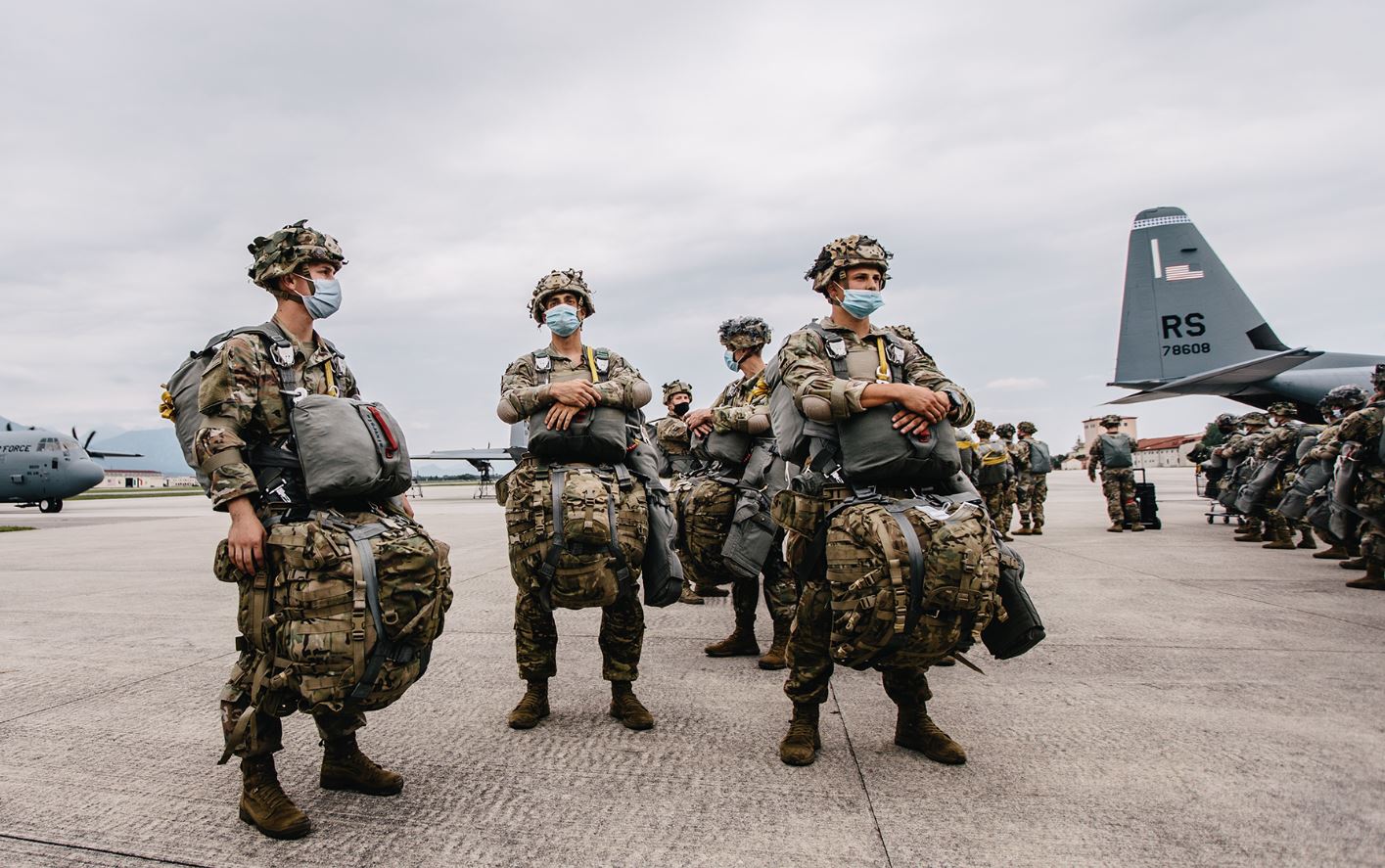
Rise, peril, and transformation of airborne warfare through courage, innovation, and sacrifice
The Dream of the Vertical Battlefield
For centuries, generals studied maps that chained their armies to the ground. Strategy bent to rivers, mountains, and roads, but the invention of flight offered liberation from all of them. Airborne operations were born from the audacious idea that soldiers could descend from the sky directly into the enemy’s heart. It was a concept that defied convention and courted disaster. To drop men behind enemy lines demanded precision that technology could barely promise. Yet visionaries believed the risk justified the potential reward. Control of the sky meant control of surprise. It meant shaping the tempo of battle before the first shot was fired. The dream of the vertical battlefield belonged to those who saw warfare as movement rather than stalemate. The early pioneers were not just pilots or paratroopers but architects of a new dimension of war, one that would forever alter how nations fought and how soldiers experienced the chaos of combat.
First Steps into the Unknown
The earliest experiments in airborne warfare were equal parts innovation and improvisation. In the 1920s, the Soviet Union tested the first large-scale parachute drops, training troops to leap from slow-moving aircraft and secure objectives independently. The idea quickly caught the imagination of military thinkers worldwide. Italy and Japan followed with their own units, but it was Germany that refined the concept into an operational weapon. The Fallschirmjäger, trained under General Kurt Student, became symbols of daring and precision. They practiced silent landings, rapid assembly, and coordinated strikes that combined shock with mobility. When they stormed Belgium’s Fort Eben-Emael in 1940, descending from gliders and capturing the fortress within hours, the world witnessed a new kind of warfare unfold. Yet success was costly. Early operations revealed the fragility of airborne troops, who often fought isolated and undersupplied. The lesson was brutal but enduring: courage could not replace coordination, and no airborne plan survived long without support from the ground.
The Ordeal of Crete and the Cost of Glory
The Battle of Crete in 1941 became both triumph and tragedy for the airborne idea. German paratroopers, confident after earlier victories, launched the largest airborne invasion in history. They dropped across the island with the ambition to seize airfields and outflank Allied defenses. The plan was bold, the execution chaotic. Winds scattered units miles from their targets, equipment was lost in the sea, and anti-aircraft fire shredded waves of gliders before they touched ground. The defenders fought fiercely, transforming villages into fortresses. Yet the Germans adapted, regrouping under fire, and by the battle’s end, they had taken Crete, but at a price that horrified even their leaders. Thousands of elite troops lay dead or captured. Hitler, shaken by the blood cost of victory, forbade further large-scale airborne assaults. Ironically, his caution proved the doctrine’s resilience. Other nations learned from Crete’s mistakes rather than its casualties. The Allies saw potential where Germany saw loss. From that moment, airborne warfare ceased to be an experiment and became a strategic tool refined through necessity and imagination.
The Allied Leap into Europe
When the Allies prepared to storm Europe, airborne forces stood at the forefront of their vision. In the dark hours before D-Day, paratroopers of the 82nd and 101st Airborne Divisions leapt from C-47 transports over Normandy. Their mission was not to conquer but to confuse, to fracture German response and secure vital crossroads ahead of the beach landings. The night sky filled with tracers and flak. Planes scattered, drops misaligned, and many soldiers landed miles from their objectives. Yet improvisation turned chaos into opportunity. Small groups fought as independent bands, ambushing convoys and holding bridges. Their disarray became deception, convincing German commanders that invasion points stretched farther than they did. Days later, British paratroopers at Arnhem and American troops at Nijmegen repeated the experiment during Operation Market Garden, a daring but flawed attempt to leap across rivers into Germany. The campaign faltered, but the legacy endured. Airborne warfare had proven its power to shape the tempo of conflict, even when plans unraveled. Its success lay not only in precision but in the ability of its soldiers to turn disorder into momentum.
From Europe to the Pacific and Beyond
While Europe witnessed the grand scale of airborne strategy, the Pacific theater showed its adaptability. Terrain and distance made traditional deployments impossible across vast island chains. Airborne units became instruments of reach, delivering shock troops where ships could not sail. The Japanese used paratroopers in early conquests, while Allied forces adopted similar tactics in Burma and the Philippines. Each drop demanded synchronization of navigation, weather, and timing, where a single delay could turn success into catastrophe. After the war, the concept evolved rather than faded. The United States and the Soviet Union invested heavily in airborne divisions, seeing them as tools of rapid projection in a world divided by ideology. Paratroopers became political as much as tactical symbols, embodiments of readiness and resolve. In Korea and Vietnam, helicopters extended their reach, bridging the gap between air and ground in seconds. The parachute gave way to the rotor, but the spirit of airborne warfare, mobility, surprise, and independence, remained unchanged. The battlefield had moved upward, and there was no going back.
Technology, Precision, and the Modern Airborne Soldier
Modern airborne operations rely on sophistication that early pioneers could never have imagined. GPS guidance, night vision, and advanced parachute systems allow troops to land silently within meters of their objectives. Cargo delivery has evolved into an art of precision, with supplies guided by automated gliders that adjust midair to terrain and wind. The aircraft themselves have changed from lumbering transports to versatile machines capable of low-altitude insertion and extraction. Yet technology, for all its refinement, does not erase risk. Every jump carries uncertainty. Wind, mechanical failure, or enemy detection can still scatter even the most disciplined formations. Training now emphasizes flexibility and psychological resilience as much as marksmanship or fitness. The modern airborne soldier must master not only descent but adaptation. In counterinsurgency and humanitarian missions alike, they remain the embodiment of speed and adaptability. Airborne units now bridge the gap between traditional infantry and special forces, operating as the first to arrive and the last to leave when global crises demand response within hours.
The Psychology of Descent and Brotherhood of the Sky
Beyond tactics and equipment lies the human element that defines airborne warfare. The act of jumping into combat from thousands of feet above ground demands a singular kind of courage. Soldiers step into darkness knowing they will land amid chaos, separated from support, and surrounded by uncertainty. Fear does not vanish, it transforms into focus. The bond among airborne troops grows from this shared experience. They are united not by proximity but by trust that others will follow through the air and meet them on the ground. Training instills ritual and repetition that replace hesitation with instinct. Veterans often speak of the silence before the jump as the truest test of spirit, where noise fades and every heartbeat measures belief. This psychological endurance distinguishes airborne forces from other branches. Their missions begin not with arrival but with surrender to gravity, an act of faith in their equipment, their comrades, and the commanders who send them. The brotherhood that forms in that descent endures long after the parachutes are folded, binding generations who have learned to face fear by leaping into it.
Airborne Operations in the Future Battlespace
The horizon of airborne warfare continues to expand, reshaped by new technologies and shifting doctrines. Hypersonic transports and autonomous gliders promise deployment anywhere in the world within hours. Artificial intelligence already assists in planning routes that minimize detection and optimize landing zones. Robotics are entering the drop zone, with drones capable of delivering supplies or even engaging targets alongside human troops. Yet the essence of airborne warfare remains human. Machines can calculate trajectories, but they cannot replicate instinct. In future conflicts, airborne forces will likely integrate cyber and electronic warfare capabilities, striking not only physical targets but also communication and data networks. They will operate in hybrid spaces where the drop zone may exist both on land and in the digital spectrum. The challenge will be maintaining flexibility in an era of automation. As warfare grows more complex, the principles that defined the first paratroopers, initiative, endurance, and audacity, will remain the foundation upon which every innovation must stand. The future sky may be filled with machines, but the courage to leap into it will always belong to people.
The Legacy of the Skyborne Warrior
From the earliest parachute jumps to the high-tech insertions of today, airborne operations have represented the most daring fusion of imagination and will in military history. They defied gravity, logic, and fear to bring war from above. The men and women who stepped into those roaring aircraft carried not just weapons but conviction, the belief that boldness could bend the course of events. Their history is written in moments of brilliance and loss, from Normandy’s hedgerows to the jungles of Southeast Asia. Each operation, successful or not, added to a tradition of courage measured not by distance traveled but by the will to fall from the sky and fight upon landing. Airborne warfare continues to evolve, but its spirit remains timeless. It stands as a reminder that in every generation, there are those willing to leap into the unknown so that others may stand safely upon the ground. The wings over the horizon still beckon, and as long as there are wars to be fought or peace to be defended, someone will answer their call.