

Signal Lines in the Smoke
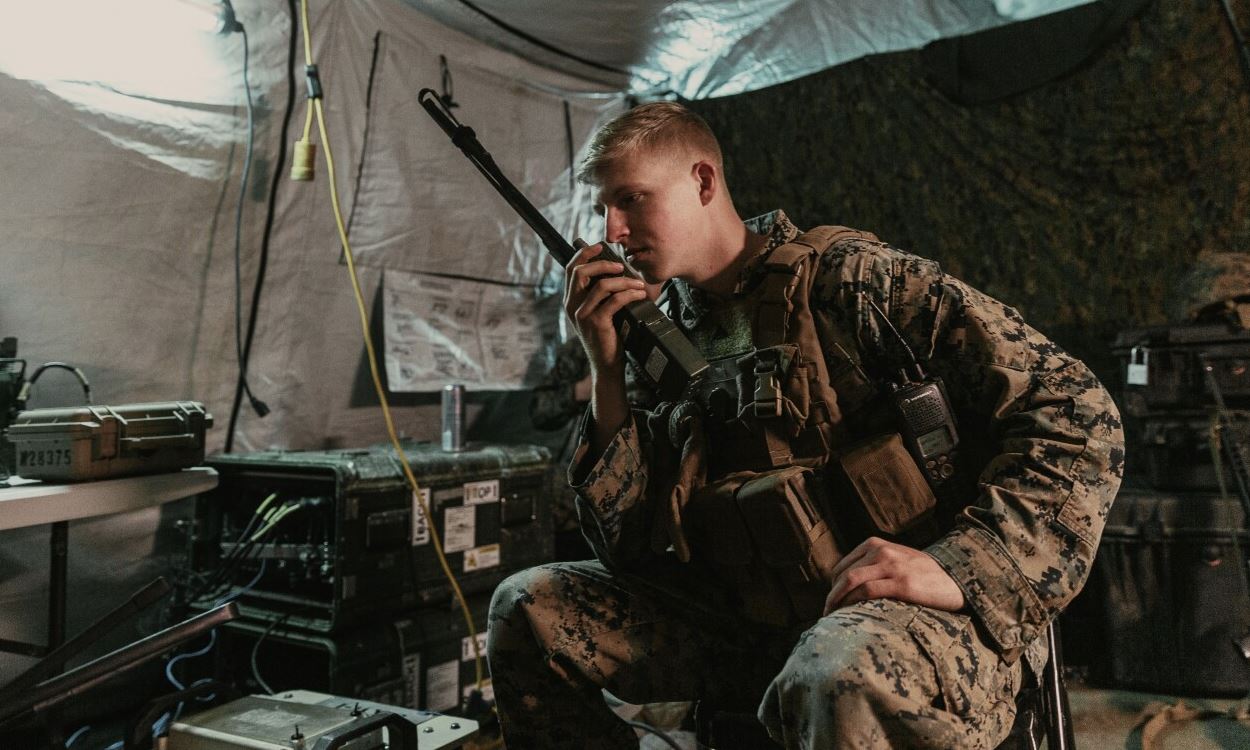
Armies learn to speak through chaos, across distance, and under fire
The First Messages Across Noise
Long before circuits whispered and satellites circled, a commander’s voice traveled on courage and memory. Orders lived in songs that scouts rehearsed until every phrase could survive fear, and in small tablets carried by runners who trusted legs more than luck. Horns carved bursts of meaning across wind, while torches answered from ridges when clouds allowed. Each method solved a problem and created another. Speed brought error, distance bent intent, and smoke or rain could swallow meaning like a tide. Early formations learned to pair message with ritual so that bodies finished sentences that words could not. A shield lifted high meant hold the line, a spear angled forward meant press, and a banner turned at a measured angle meant pivot as one. No tool mattered more than rehearsal. Units drilled call and answer until reflex replaced debate. The lesson endures in every age. Communication is not a gadget, it is a pact that binds people to a rhythm they can trust when fear swallows breath. The first messages across noise taught leaders to simplify, to repeat, and to confirm, because the battlefield punishes poetry and rewards clarity. Those truths survive every invention, no matter how clever the wire or the code above it.
Banners, Drums, and Beacons
When dust obscured faces and the roar of combat blurred speech, sight and sound became command. Flags carried shape and color that cut through distance better than voice. A standard was more than cloth. It anchored identity, marked the axis of movement, and turned space into grammar. When the banner nodded to the left, companies drifted that way. When it dipped low, lines sank behind shields and braced. Drums joined the language with patterns that paced march, volley, and reload. Trumpets layered crisp calls for advance, recall, or rotation, each note tied to behavior rehearsed in camp. Beacon fires extended range far beyond the field, warning towns and forts with a vocabulary of intervals. A short flame then a long glow meant riders inbound. Three steady flares meant musters at dawn. Yet all of this relied on discipline. A brave standard bearer who lost alignment could send whole cohorts swinging the wrong way. A careless drummer who rushed a pattern could collapse a volley into waste. Commanders learned to guard their signals like bread and water. They assigned reserves to replace fallen signalers, paired every visual cue with an audible partner, and kept spare banners hidden against deception. Opponents tried to mimic these languages, so units added small variations known only to their own. The art was simple to see yet difficult to corrupt, because the truest authentication was the motion of a thousand trained feet keeping time.
Wires, Valves, and the Birth of Radio
The industrial age stretched the voice of command across continents. The telegraph turned ideas into pulses that outran horses, and railways delivered couriers faster than a storm could scatter them. Misplaced breaks changed letters, so operators invented rituals of confirmation that live today in read backs, challenge words, and acknowledgments. Field telephones brought this reliability to the front, though wiremen paid a hard price. They crawled under shellfire to lay cable across churned earth, then returned to splice nerves the ground had torn. Radio liberated movement. Armies no longer tied plans to poles and trenches. A company on the march could speak with artillery beyond sight. A ship could reach a fleet over the horizon. New power brought new peril. The air carried every voice to friend and foe alike. Direction finders learned to hunt transmitters, and gunners learned to punish any station that talked too long. Discipline adjusted. Nets adopted strict brevity, transmit windows, low power settings, and antennas trimmed to terrain. Operators shielded gear from rain and dust, minded batteries like treasure, and learned to shade microphones with helmets to hide breath from wind. Headquarters changed layouts to protect radios from curious eyes and from the boredom that breeds chatter. The promise of radio was freedom, yet its price was self control, because the spectrum remembers every careless word.
Codes, Ciphers, and Trust
Once messages could travel far, secrecy became a front line of its own. Simple substitution yielded to codebooks, then to mechanical and electronic ciphers. Each step promised safety, and each step summoned adversaries with sharper tools. The duel shaped more than mathematics. It shaped behavior. The most common failures were human. Reused keys, predictable openings, and sloppy distribution offered foes the cracks they needed. Armies answered with drills that turned good practice into habit. Operators rotated pads on schedules known only to trusted pairs. Clerks sealed copies with wax and cord that showed any tampering at a glance. Units used authentication tables to keep impostors from speaking on their nets, and officers signed off with daily challenges that changed at dusk. Even with strong ciphers, commanders respected time. A long message invited analysis, so complex orders traveled in fragments that made little sense alone. When urgency forced plain language, units masked meaning with euphemism arranged in advance. A harvest might mean a withdrawal. A market might mean a bridge. Training made these shared fictions fast to recall and hard to guess. In this world, trust is the real encryption. Teams succeed when each person expects care from the others, and when leaders reward those who guard secrets without turning secrecy into vanity.
Command Rhythm and Operational Tempo
Communication exists to convert information into coordinated motion. Command rhythm is the cadence by which units sense, decide, and act. If the rhythm outruns supply, formations stumble. If it drags, opponents seize initiative. Effective headquarters protect their tempo the way engineers protect bridges. They set times for reports, planning cycles, rehearsals, and fires coordination, then they defend those times from casual disruption. They publish formats that turn noise into signal, and they enforce brevity so that critical paths stay clear. Leaders shape nets according to decisions rather than personalities. Fires traffic flows on one path, logistics on another, and maneuver on a third, with cross ties only where safety demands them. The map is not the message, but the map guides the message to the right hands. Good staffs treat silence as a resource. They schedule quiet periods to prevent fatigue, and they build fallbacks that keep the system moving when a node fails. When orders go out, the speech is not the plan. The plan is the behavior the speech elicits. That truth forces clarity. A unit that knows intent can continue after contact breaks microphones and screens. A unit that knows only detail becomes brittle at the first surprise. Rhythm, not volume, is how commanders turn radios, runners, and couriers into a single voice.
Electronic Warfare and the Battle for Spectrum
As radios multiplied, the spectrum became contested ground that no one could see. Jammers poured noise into fragile channels until headquarters grew deaf. Spoofers imitated friendly nets to sow confusion. Direction finders stalked any antenna that spoke too long, feeding coordinates to batteries that punished chatter with steel. Countermeasures matured. Frequency hopping reduced predictability. Low power sets hugged terrain with short bursts that faded before ears could fix a bearing. Spread signals blended with static and rain. Data links added redundancy so that a severed path did not kill the whole. Command posts practiced light and sound discipline, camouflaged antennas as scrub and fence, and moved often enough to stay ahead of the hunters. The best defense remained behavior. Units spoke in short cuts that carried clear meaning without wasting breath. They rehearsed hand signals and panel markers as backups for when the air went black with noise. Patrols carried codebooks in sealed pouches that burned fast if lost. Engineers taught teams to respect antennas as living things, with ground, height, and orientation that changed reach more than any power knob could. Electronic warfare taught commanders humility. No system is invincible, and every advantage invites a counter. Survival belongs to those who can fight while deaf, and to those who can keep fighting once the sky goes quiet again.
Networks, Sensors, and the Data Tide
Modern forces swim in data. Drones stare day and night. Vehicles report location, fuel, and health. Patrols text pictures from alleys and hills. Headquarters fuse these streams into common views that promise understanding at a glance. The promise is real, but the flood carries danger. Unfiltered data smothers judgment. Commanders must choose curators as carefully as they choose scouts. Watch officers decide what leaders see and when they see it, pairing pixels with context so that clarity outruns panic. Chat rooms accelerate teamwork across miles, yet they invite distraction. Good units enforce quiet hours and elevation rules that push big decisions to voice and face. They label rumor as rumor and log it, so lessons outlive the shift that learned them. They tag uncertainty plainly instead of pretending that a single image explains the ground. Networks make speed possible and error easier. The cure is culture. Teams share formats and naming that keep searches simple under stress. Analysts brief alternatives, not just favorites. Planners keep paper maps ready because batteries forgive no one. When networks fail, couriers return with grease pencil notes and photographs clipped to boards. The cycle that follows collects, confirms, and acts with restraint, because the goal is not to know everything. The goal is to know enough to move the right piece at the right time.
Lessons for the Next Fight
Battlefield communication is the spine that holds strategy upright. Tools change with each generation, yet the principles remain stubborn and plain. Simplicity beats poetry. Redundancy beats elegance. Confirmation beats hope. The unit that trains these habits into muscle will outlast any opponent who trusts a single device more than a disciplined team. The next conflicts will compress time and expand distance. Messages will cross orbits as easily as rivers, while cities will crowd signals with noise and mirrors. Adversaries will swarm across screens with false calls and staged images, trying to make a brigade swing at ghosts while the real blow lands elsewhere. The answer is not louder tools. The answer is steadier people. Leaders must rehearse silence as seriously as speech, so that squads can finish missions when the spectrum turns hostile. They must teach intent in clear language that a private can repeat without notes. They must pair every bright technology with a dark backup that works when heat and dust punish batteries and minds. Radios need hand signals. Satellites need maps. Data feeds need couriers who know the route when power dies. Above all, commanders must remember that communication is not about volume, but about effect. A single sentence that moves a tired platoon one street forward is worth more than a thousand lines of perfect data that never leave the screen. In that spirit, the craft endures. Speak clearly. Listen harder. Confirm always. Then move.