

Engines of the Future Battlefield
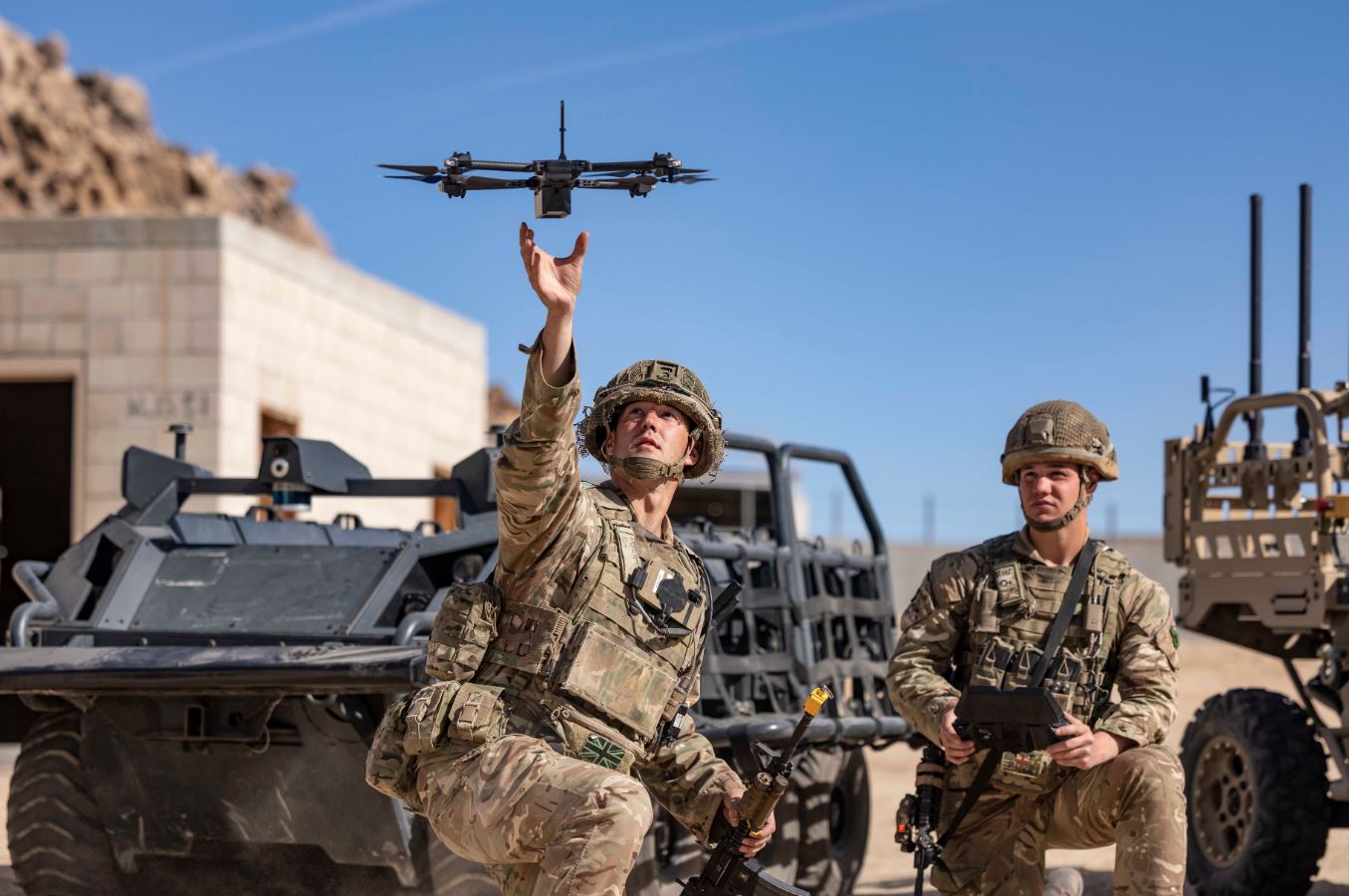
The evolution of innovation that reshaped the mechanics of power, defense, and human endurance in modern warfare
The Transformation of War Through Innovation
Every era of conflict is defined by its inventions. From sharpened stone to precision-guided systems, military technology has continually redrawn the limits of human capability and fear. The transformation of war is not only a story of machines but also of imagination, where necessity and curiosity merge into instruments of dominance. The pursuit of an advantage turned laboratories into arsenals and engineers into strategists. Over centuries, the nature of warfare has evolved from physical to digital, from visible to invisible. Battles once fought on open plains now unfold within the electromagnetic spectrum, where data and detection decide outcomes. Technology dictates tempo, and the victor is often the one who adapts faster rather than who fights harder. Modern conflict now reflects a paradox of progress, where the same brilliance that fuels defense also multiplies destruction. Yet it is this very contradiction that drives humanity’s relentless march toward mastery of its own inventions. Each advancement offers both salvation and peril, an echo of ambition that defines civilization itself.
The Industrial Revolution and the Mechanization of Power
The nineteenth century marked the mechanical awakening of war. The Industrial Revolution turned factories into the engines of empire, mass-producing weapons that standardized death. Rifles replaced muskets, artillery reached beyond sight, and steam powered both fleets and supply lines. The invention of the railway transformed logistics, enabling armies to move faster than strategy could predict. Telegraphs delivered instant communication across continents, turning distant generals into participants rather than observers. Ironclad ships rendered wooden navies obsolete, ushering in an age of steel dominance. The symbiosis between industry and warfare accelerated innovation, pushing nations to outproduce rather than outthink their rivals. War became an industrial enterprise, sustained by gears, coal, and labor. The battlefield no longer depended solely on courage but on mechanical endurance. This era introduced a new reality: that the strength of a nation was now measured not by its soldiers but by its capacity to manufacture destruction. The machine replaced the hero as the symbol of victory, and technology became the silent strategist behind every campaign.
The Rise of Flight and the Command of the Skies
When humanity first lifted itself into the air, it found a new dimension of dominance. The airplane, once a fragile curiosity, transformed within a decade into a decisive weapon. During the First World War, reconnaissance aircraft became the eyes of armies, revealing troop movements that no scout could approach undetected. Bombers soon followed, turning altitude into leverage. The interwar years refined aviation into an art of precision, speed, and terror. By the Second World War, air superiority determined victory. The dogfights over Europe and the Pacific symbolized the modern duel of intellect and machine. Technology advanced rapidly, from piston engines to jet propulsion, from canvas wings to metal fuselages. The skies evolved from frontier to fortress, where radar guided unseen defenders and long-range bombers carried devastation across oceans. The conquest of the air altered strategy forever. It erased geography as a barrier and introduced the notion that no city, however distant, was safe. The dream of flight became an instrument of both liberation and annihilation, shaping the modern military’s obsession with control from above.
The Digital Frontier and the Birth of Cyber Warfare
The late twentieth century brought a shift from steel to silicon. Computers became as vital as rifles, and data replaced ammunition in many theaters of war. Communication networks, once celebrated for their convenience, became targets of infiltration and sabotage. Nations learned that control over information could cripple economies and defenses without a single explosion. Cyber warfare emerged not as a substitute for conflict but as its evolution. Viruses, malware, and disinformation campaigns replaced sabotage and espionage in many domains. The battlefield expanded into code and connectivity, where invisible attacks could paralyze infrastructure or expose secrets hidden behind encryption. Artificial intelligence deepened this transformation, enabling autonomous systems to make decisions faster than any human could respond. Warfare became predictive, where algorithms determined probability rather than instinct. The danger lies in invisibility, where offense and defense blur. The digital revolution redefined the concept of territory. No longer confined to maps, it exists wherever data flows. Every signal, satellite, and sensor became both a tool and a target, creating a reality where control over information is the new measure of supremacy.
The Robotics Revolution and the Automation of Conflict
Automation reshaped the human role in battle. Drones, guided by satellites and controlled from continents away, turned precision into policy. Machines capable of surveillance, targeting, and even engagement blurred the line between human intent and mechanical execution. Unmanned vehicles extended reach without risk, allowing nations to project power without sacrifice. On land, robotic units patrol hazardous zones, defusing bombs or scouting terrain too dangerous for soldiers. In the sea, autonomous submarines silently map enemy routes or deploy mines without detection. The next generation of warfare moves toward swarms, networks of machines communicating faster than humans could coordinate. Artificial intelligence governs these formations, turning battlefield tactics into a form of self-learning behavior. Yet automation carries ethical gravity. When decisions of life and death are executed by algorithms, accountability becomes diffuse. The romance of heroism fades into the quiet hum of circuits. The automation of conflict reflects humanity’s desire to conquer danger by delegating it, though each innovation removes another layer of empathy from the act of war itself.
The Evolution of Defense and the Rise of Precision Systems
As offensive technology advanced, defense evolved in tandem. The concept of armor expanded from physical protection to digital shielding. Precision became the defining quality of modern weaponry. Guided missiles, laser targeting, and satellite tracking reduced randomness, transforming destruction into a calculated craft. A single strike could now achieve what once required an entire campaign. Yet with precision came complexity. Systems grew interdependent, relying on satellites, sensors, and data synchronization. Anti-missile shields, stealth technology, and adaptive camouflage redefined survivability. Nations invested billions to stay invisible or to detect the invisible. The balance between attack and defense became an endless cycle of adaptation. The pursuit of accuracy mirrored humanity’s paradoxical desire for controlled chaos. Every technological improvement that reduced collateral damage also made war seem more manageable, more clinical. Precision gave power an illusion of morality, suggesting that with enough accuracy, violence could become rational. Yet history shows that precision often multiplies ambition, tempting leaders to strike first because they believe they can do so cleanly.
The Integration of the Human and the Machine
The boundary between soldier and system continues to erode. Exoskeletons enhance endurance, sensors extend perception, and neural interfaces link minds directly to machines. The modern combatant carries more computing power than entire command centers once possessed. Biometric monitoring predicts fatigue and emotion, allowing commanders to assess morale in real time. Augmented reality overlays data onto vision, merging strategy with instinct. This fusion creates a new kind of warrior, half biological, half technological, designed for precision and resilience. Yet the psychological burden intensifies. Soldiers now operate in environments saturated with information, where awareness can overwhelm clarity. The integration of human and machine raises questions of identity and autonomy. Who commands when instinct is guided by data, and when emotion is filtered by software? The evolution of warfare reveals humanity’s desire to transcend its own limits, to erase weakness through invention. But in doing so, it risks losing the very intuition that made survival possible. The future of conflict may not be fought by armies or robots alone but by hybrids that embody both the brilliance and fragility of their creators.
The Race for Supremacy in the Age of Innovation
Every generation inherits the pursuit of technological dominance as both a promise and a curse. Innovation accelerates under pressure, and no motivation exceeds that of survival. The twenty-first century has transformed this pursuit into a race that no one can finish. Quantum computing promises encryption beyond comprehension, while hypersonic weapons threaten to outrun reaction. Space, once a domain of wonder, has become the next strategic frontier, where satellites double as spies and weapons. The competition for supremacy extends beyond nations to corporations, whose research defines capability as much as government funding does. Private industries now produce drones, cybersecurity tools, and artificial intelligence systems that influence global defense strategies. The distinction between civilian and military innovation blurs, as every technological breakthrough carries potential for both benefit and harm. In this climate, cooperation and competition coexist uneasily. The race for supremacy ensures constant progress but also constant instability, for the power to innovate has become as dangerous as the power to destroy. The outcome of this race will shape not only future wars but the moral trajectory of humanity itself.
The Future That Builds Itself
Military technology reflects the mind of civilization in its rawest form. It embodies ingenuity, fear, and ambition woven together by necessity. Every advancement that secures peace also prepares the tools of its undoing. The future of warfare may arrive silently, built not by soldiers or politicians but by algorithms designing solutions that even their creators cannot predict. Automation, artificial intelligence, and quantum systems will eventually collaborate to construct weapons without direct human command. The machines will learn not only how to fight but why. The greatest challenge of the coming century will not be invention but restraint. Humanity must decide whether technology remains a servant of defense or becomes the architect of its extinction. The history of military innovation reminds us that progress cannot be stopped, but it can be guided. To guide it requires wisdom equal to ambition, humility equal to power. As the engines of the future battlefield awaken, the question endures: will they preserve the world or perfect its destruction?