
Currents of Steel and Sail
Tracing the Transformation of Naval Power from Ancient Waters to the Modern Horizon
From Oar to Empire
The story of naval warfare begins not with cannon or sail but with muscle and timber. Early civilizations learned that the control of rivers and coasts offered power greater than any fortress could promise. The first warships were extensions of the human body, driven by rhythm and endurance. Egyptian galleys glided across the Nile carrying archers, while the Phoenicians mastered the Mediterranean through fleets that traded as much as they conquered. These early vessels were simple yet revolutionary, enabling communication, commerce, and conflict across great distances. Oarsmen were the engine of empire, their sweat feeding the ambitions of kings. Over time, tactics evolved from chaotic collisions into organized formations, where the speed of rowing and the timing of impact determined survival. Sea battles became contests of precision, where ramming an enemy’s hull at the perfect angle could decide the fate of nations. The age of oars introduced humanity to a new kind of battlefield, one that moved and breathed, where the line between storm and strategy often blurred. In this world, mastery of the sea became mastery of destiny.
The Age of Wind and Wood
When sails replaced rows of sweating men, warships became instruments of endurance and range. Wind transformed fleets into global forces. The Greek trireme evolved into the Roman quinquereme, but it was in the age of exploration that sail power reached its zenith. Nations like Spain, Portugal, and England recognized that wind was wealth and control of ocean currents meant control of continents. The galleon embodied this new reality, a floating fortress capable of carrying both commerce and cannon. Battles shifted from ramming to broadsides, where lines of ships exchanged thunderous volleys that turned sea foam red. Commanders became artists of wind, learning to read the sky as much as their enemies. Naval engagements required calculation, timing, and coordination beyond what land battles demanded. The fleet that mastered formation could envelop and crush opponents through maneuver alone. The seas became the ultimate expression of empire, and harbors became the hearts of global ambition. Sail power created the first truly international conflicts, where victories were measured in both miles and years.
The Age of Gunpowder and Glory
The seventeenth and eighteenth centuries transformed naval combat into an art of precision and engineering. Gunpowder turned ships into mobile artillery platforms, and naval architects reshaped vessels to withstand the recoil of heavy cannon. The line of battle became the gold standard of engagement. Fleets moved like chess pieces, each broadside timed to exploit wind and visibility. Naval officers rose to fame not just for bravery but for their mastery of geometry and momentum. The Battle of Trafalgar immortalized this philosophy, where Admiral Nelson shattered the French and Spanish fleets through unconventional formation. Courage mattered, but coordination mattered more. The ship of the line became both a weapon and a symbol, projecting national identity across oceans. Every engagement required immense logistical support, from supply ships to dockyards. The sea had become a stage for political theater, where a single victory could shift global alliances. Naval dominance was now synonymous with civilization itself, and those who ruled the waves controlled the narrative of history.
The Iron Revolution
The Industrial Age unleashed an evolution unlike any the oceans had seen. Iron replaced wood, and steam replaced wind. Naval power entered an age of relentless invention. The first ironclads appeared during the mid-nineteenth century, signaling the death of centuries-old traditions. Britain’s HMS Warrior and France’s La Gloire represented a revolution that rendered wooden navies obsolete almost overnight. Armor plating, rotating turrets, and explosive shells changed the calculus of combat. The sea no longer cared about beauty or tradition; it respected only endurance and firepower. Steam engines freed fleets from dependence on wind, allowing movement against tide and weather alike. Naval architecture became a race of metallurgy, propulsion, and efficiency. The American Civil War’s clash between the Monitor and the Merrimack demonstrated that the rules of naval engagement were being rewritten in real time. Admirals became engineers, and strategy fused with science. Nations invested in steel yards and foundries as fiercely as in training academies. Naval warfare had entered the machine age, where progress was both weapon and weakness, since every breakthrough demanded an immediate replacement.
The Dreadnought Era and the Globalization of Power
At the dawn of the twentieth century, the oceans witnessed a singular transformation. The launch of HMS Dreadnought in 1906 redefined naval hierarchy. Larger, faster, and armed with uniform batteries of massive guns, the Dreadnought rendered all existing battleships obsolete in an instant. The world’s navies entered a feverish arms race. Shipyards worked without rest, and nations poured fortunes into fleets that represented both pride and peril. The battleship became the modern cathedral of power, a monument to industrial ambition. Naval strategy expanded into geopolitics as sea control dictated colonial policy. The First World War revealed both the potential and the fragility of these giants. Submarines began to stalk them from below, and mines turned waterways into traps. The dreadnought’s reign was magnificent but short. Yet its influence endured, setting the foundation for fleet coordination, command infrastructure, and communication protocols that would define twentieth-century warfare. It proved that naval dominance was no longer about individual ships but about integrated systems where intelligence and logistics determined survival as much as armor and guns.
The Rise of the Aircraft Carrier
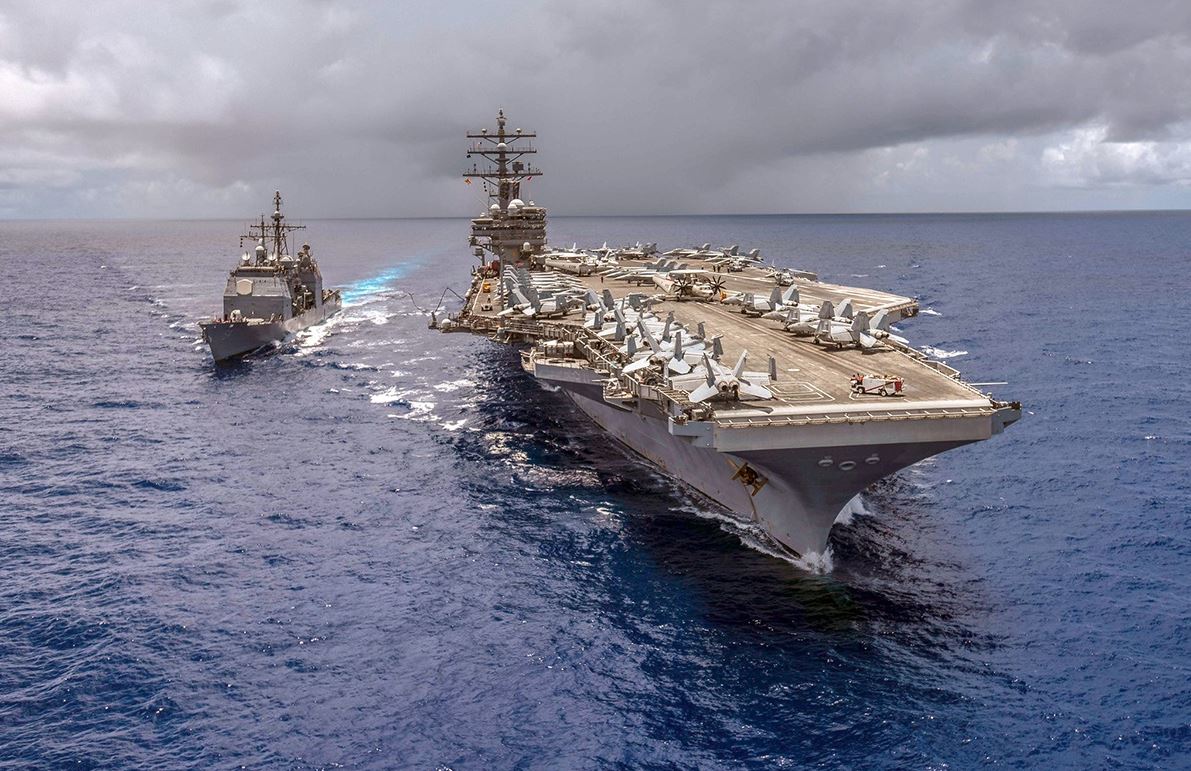
The Second World War shifted the ocean’s hierarchy once more. The battleship, once the undisputed monarch, yielded to a new ruler: the aircraft carrier. Air power transformed the horizon into a layered battlefield that stretched far beyond the reach of cannon. Fleets no longer sought to close distance; they sought to control airspace. Battles like Midway and the Coral Sea proved that control of the skies was control of the seas. Carriers became mobile airfields, capable of projecting force across thousands of miles. Naval engagements became duels of detection, where reconnaissance and radar mattered more than sheer firepower. Technology and timing fused into one. Pilots became sailors of the air, and mechanics became the lifeline of fleets. The carrier group emerged as a microcosm of national might, supported by destroyers, cruisers, and submarines that formed its defensive ring. The sea became an invisible chessboard where strategy operated in three dimensions. The lessons of this transformation echoed into every conflict that followed, proving that flexibility and innovation were the new forms of naval courage.
The Silent Hunters of the Deep
While aircraft dominated the surface, the depths belonged to the submarine. No weapon so perfectly captured the tension of modern warfare as the vessel that could see but not be seen. From the German U-boats of the First World War to the nuclear submarines of the Cold War, these machines changed how nations perceived power. A single submarine could cripple entire fleets or threaten cities without ever surfacing. The ocean floor became a realm of ghosts and echoes, where sound replaced sight as the measure of danger. Sonar evolved into both shield and spear, guiding torpedoes and detecting intruders. Submarines blurred the line between deterrence and terror, especially when armed with nuclear missiles capable of ending civilization. Their existence redefined diplomacy, creating balance through fear. Life aboard them demanded endurance of a different kind, a patience forged in steel corridors and silent routines. In the cold and pressure of the deep, warfare became psychological as much as mechanical. The submarine proved that true dominance of the sea required mastery of what could not be seen.
The Digital Horizon and the Future of the Fleet
The twenty-first century has brought the ocean into the age of algorithms. Modern warships navigate not by stars but by satellites, and their guns have given way to guided missiles that can strike targets over the curvature of the Earth. Networks link fleets into living systems where sensors, drones, and artificial intelligence coordinate decisions faster than any human admiral could manage. Unmanned submarines patrol depths once unreachable, while surface drones map currents and track enemy signatures. The new frontier of naval warfare lies in information. The side that sees first and reacts fastest wins. Cybersecurity now guards as fiercely as armor once did. Yet, even amid digital sophistication, the ocean retains its ancient unpredictability. Storms still scatter fleets, and isolation still breeds courage. The balance between technology and instinct remains delicate. The navies of the future will depend not only on machines but on the same discipline that guided sailors since the first oar dipped into water: precision, cooperation, and the will to endure the unknown.
The Endless Sea of Adaptation
Across thousands of years, naval warfare has remained a reflection of humanity’s restless creativity. Every new invention has promised invincibility, and every promise has eventually met its countermeasure. The sea teaches humility because it never stops changing. Wooden triremes, ironclads, and nuclear carriers all belong to a single lineage of adaptation. Each era has replaced the old gods of war with new ones, yet the essence remains the same: control of movement and mastery of environment. To command the sea is to command uncertainty. The navies of tomorrow will sail not just through water but through data, through atmospheres of interference, and through the moral fog that technology brings. The ocean has always been both stage and mirror, revealing what nations fear and what they aspire to become. The evolution of naval warfare is not a march toward dominance but a cycle of learning, forgetting, and rediscovery. The waves erase every triumph in time, yet they also preserve the echo of courage that keeps humanity returning to the horizon.